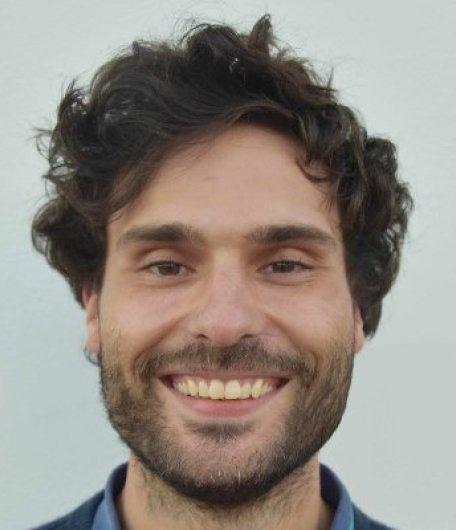
Dr Theo Di Castri

BA MPhil

College position:

Junior Research Fellow

Theo Di Castri
Theo Di Castri

Dr Di Castri studies the intersections of social science, drug policy, education, public health, and the carceral state. With a background in neuroscience, comparative literature, critical pedagogy and the history and philosophy of science, he draws on multiple methodologies and work across disciplinary boundaries.

His current book project examines how social scientific expertise about drugs has been mobilized in and between the US, Mexico and Colombia in the broader context of the war on drugs. It explores how such expertise has both shaped and been shaped by a range of future-making projects: from hegemonic fantasies of ‘a drug free world’ to counter-public visions of ‘a world in which many worlds—including those of drug users—can fit’. In doing so, it argues for widening the geographical frames of our histories of the social sciences and public health as a means of better capturing the variegated geographies of their influence and practice.

In parallel with his historical research, he has an active, participatory action research agenda that builds off his former work as a member of the Catalyst Collective - a transnational education collective that was dedicated to rethinking drug education with students and educators from communities affected by the war on drugs. His current project, ReD: Replanteando las drogas/Rethinking drugs, brings together scholars, activists, artists, curators, students and members of the general public in Mexico and the UK to explore how drug education can be expanded along more critical, democratic and transdisciplinary lines.

He also co-convenes two research seminars: Post-Prohibition: Research, Pedagogy, Action, an interdisciplinary CRASSH Research Network that is dedicated to thinking critically and comparatively about the shifting global drug policy landscape; and the History of Science in Latin America reading group at the HPS department. 

Research Interests

Estudio las intersecciones entre las ciencias sociales, la política de drogas, la educación, la salud pública y el Estado carcelario. Con una formación en neurociencia, literatura comparada, pedagogía crítica y en historia y filosofía de la ciencia, recurro a múltiples metodologías y trabajo a través de fronteras disciplinares.

Estoy escribiendo un libro que examina cómo la pericia científica sobre las drogas ha sido movilizada dentro y entre Estados Unidos, México y Colombia en el contexto más amplio de la guerra contra las drogas. El libro analiza cómo dicha pericia ha configurado y, a la vez, ha sido configurada por una variedad de proyectos que buscan construir futuros distintos: desde fantasías hegemónicas de “un mundo libre de drogas” hasta visiones contra-públicas de “un mundo donde quepan muchos mundos”—incluyendo los de las personas que usan drogas. En este sentido, propongo ampliar los marcos geográficos de nuestras historias de las ciencias sociales y la salud pública, con el fin de captar mejor las geografías variegadas de su influencia y práctica.

En paralelo con mi investigación histórica, mantengo una agenda activa de investigación-acción participativa que se basa en mi trabajo previo como integrante de Catalyst Collective, un colectivo educativo transnacional dedicado a repensar la educación sobre drogas junto a estudiantes y docentes de comunidades afectadas por la guerra contra las drogas. Mi proyecto actual, ReD: Replanteando las drogas/Rethinking Drugs, reúne a investigadores, activistas, artistas, curadores, estudiantes y miembros del público general en México y el Reino Unido para explorar cómo la educación sobre drogas puede ampliarse en direcciones más críticas, democráticas y transdisciplinarias.

También co-coordino dos seminarios de investigación: Post-Prohibition: Research, Pedagogy, Action, una red interdisciplinaria de CRASSH dedicada a pensar de manera crítica y comparativa el cambiante panorama global de las políticas de drogas; y el grupo de lectura Historia de la Ciencia en América Latina del Departamento de Historia y Filosofía de la Ciencia.

Links to online publications, articles or other work

Di Castri, Theo. "From political action to effective technology: Reassembling the social science of prevention in the US since 1970." The Social History of Alcohol and Drugs 38, no. 1 (2024): 65-96. https://doi.org/10.1086/729332.

Di Castri, Theo “Di Castri, Theo. "The settler colonial roots and neoliberal afterlife of Problem Behavior Theory." Journal of the History of the Behavioral Sciences 59, no. 2 (2023): 107-128. https://doi-org.ezp.lib.cam.ac.uk/10.1002/jhbs.22218

Di Castri, Theo. [EN] "Catalyst: Expanding Harm-Reduction Education and Youth Participation in the Context of the War on Drugs." (2020) https://doi.org/10.33682/w0v7-x02k / [ESP] "Catalyst: ampliación de la educación en reducción de daños y participación juvenil en el contexto de la guerra contra las drogas." (2020) https://doi.org/10.33682/3j47-53th

2
3